
The Benefits of Joining Professional Art Classes for Skill Development
Written by
CalColor
,
June 30, 2026
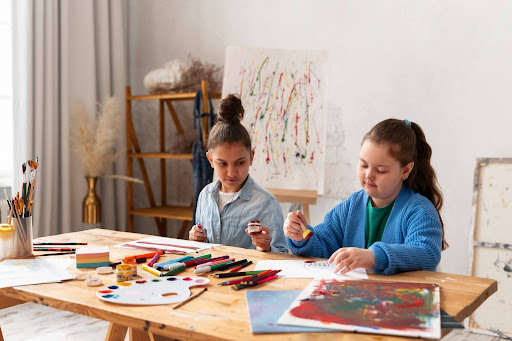
Every kid starts out scribbling with crayons on whatever surface they can find, including your fresh living room walls. It is awesome creative energy to watch. But eventually, that raw childhood passion hits a frustrating wall.
Suddenly, their excitement outruns their actual technical ability. They want to draw a realistic horse, but it keeps looking like a potato. That is exactly where joining professional art classes comes in to save the day.
These structured studio sessions do not squash a child's natural creativity. Instead, they give young artists the hard skills required to draw exactly what they see inside their heads without getting discouraged.
Moving Beyond Simple Kitchen Counter Crafts
Most regular school art programs are brutally squeezed for time and funding these days. Because of those limitations, students rarely get past basic cutting, pasting, and simple finger-painting crafts.
Though these exercises can prove effective for toddlers, genuine artistic development demands a totally different kind of rigorous training process. As soon as a kid is ready to move up to the next level, he needs ideas that will work out his mind and motor abilities.
- Mapping Light Sources: Learning about how one light source can produce highlights, core shadows, and cast shadows on a sphere.
- Pencil Pressure Control: Learning how, by simply manipulating your hands, you can vary the thickness and darkness of charcoal lines.
- Geometric Analysis: Breaking down a complex figure, for instance, a hand, face or any other animal body, into simple geometric shapes prior to sketching.
- Vanishing Points: Understanding how the simplest principles of perspective help convert a two-dimensional sheet of paper into a three-dimensional city road.
- Color Chemistry: Learning how to mix muddy tones on purpose to make the vibrant primary colors pop off the canvas.
- Line Weight Secrets: Understanding when to use hard, sharp outlines versus soft, blurred edges to create realistic depth and visual focus.
When kids learn these mechanical basics in professional drawing classes, their entire confidence changes. They stop guessing where lines go and start analyzing their subjects like actual visual scientists.
The Skill Development Step
This evolution is all about moving past pure luck. Instead of just hoping a drawing turns out well, structured training teaches young artists a repeatable process for visual success.
They learn how to perceive the world in an entirely different way. They dissect huge and scary landscapes into little bits, which can be easily conquered bit by bit using just their pencils.
This fundamental ability totally eliminates the feeling of fear when facing the white paper. It substitutes their fear of creating with a practical plan of action that can be applied anywhere.
If a child knows what makes up the essence of an object, then drawing for them is like solving a very interesting puzzle instead of being a stressful exam.
The Hidden Mental Benefits of Studio Practice
Art is not just a relaxing hobby for a rainy afternoon. It is actually a fantastic workout for a child’s brain and emotional stamina.
Working on a single project for multiple weeks straight teaches kids a rare level of patience. This extended focus is something modern digital screens completely destroy with constant notifications.
- Embracing Failure: Learning that an incorrect pencil line is just data showing you how to fix the next stroke.
- Extended Focus: Staying locked into a single canvas for two hours without checking a phone or looking for easy distractions.
- Constructive Feedback: Hearing advice from instructors and peers without taking the critique as a harsh personal insult.
- Goal Setting: Planning a major canvas project over a month, hitting specific milestones every single week without rushing.
- Creative Resilience: Pushing through the awkward middle phase of a painting when everything looks messy and unfinished.
This mental shift changes how they handle regular schoolwork, too. When a kid masters a tough shading technique after failing three times, hard math problems do not seem quite as terrifying anymore.
Why a Dedicated Creative Community Changes Everything
It can feel pretty isolating to be the only kid in a regular school classroom who wants to sit and sketch all day. Enrolling in focused art training classes changes their entire social dynamic.
- Shared Inspiration: Seeing what the student sitting next to you is building pushes you to try harder techniques.
- Creative Validation: Realizing that being obsessed with perspective lines or color wheels is actually an incredibly cool lifestyle skill.
- Collaborative Energy: Bouncing ideas off other creative brains to solve composition problems together on a large canvas.
- Healthy Competition: Seeing a peer master a difficult texture inspires everyone else in the studio to step up their game.
- Artistic Dialogue: Learning how to talk about art using proper terminology, which sharpens their verbal communication skills.
This community aspect keeps kids accountable and excited to show up every week. They are not just practicing a solo hobby alone in their bedrooms anymore.
Finding the Right Studio Environment
Finding the right space makes all the difference when your child is ready to take their work seriously. A generic craft hour will not cut it when they are craving real growth.
They need teachers who understand how to guide them through complex ideas. The instruction shouldn't make the studio feel like a boring lecture hall.
The environment must be alive, dynamic, and packed with high-quality materials. Using professional tools makes kids feel like real, working masters of their craft.
Our team at CalColor built our entire program around this exact developmental trajectory. We design our curriculum to honor a child's unique imagination while layering in the serious techniques they need to grow.
If you are hunting for premium art classes in Belmont, our spaces are fully equipped with professional tools and led by working artists who love mentoring. We know how to guide students through a systematic art class for kids without draining the fun out of the studio.
Ready to reserve a spot?
Frequently Asked Questions
Q. How do professional art classes at CalColor differ from regular options?
Standard school art programs have to split thin budgets across huge classes, often sticking to basic crafts. Our professional programs provide high-grade materials, working artist mentors, and structured technical milestones that guarantee measurable skill development over time.
Q. Are professional drawing classes too rigid for younger children?
Not at all. We introduce foundational concepts like perspective and volume through engaging, age-appropriate projects. Kids learn genuine technical skills while drawing subjects they love, keeping the experience highly rewarding and fun.
Q. What should we look for in local art training classes for teens?
Look for programs that offer diverse media tracks, like digital painting and classical oils, alongside formal portfolio development. A great studio program should prepare advanced students for college applications and high-level competitions.
Q. Where are your art classes at the Belmont studio located for weekly drop-offs?
Our Belmont studio is easily accessible for local Peninsula families, offering safe facilities and flexible afternoon or weekend schedules. You can check our location directory for exact driving directions and class times.
Q. Can a beginner start with an advanced art class for kids?
We evaluate every student to place them in the perfect tier for their current level. Beginners get foundational tracks that build basic confidence, ensuring they never feel overwhelmed or left behind by their peers.
Author Bio
CalColor provides art education for young artists through regular classes, children's art programs, and seasonal art camps. Its programs are designed to develop creative skills and support students interested in artistic development, portfolio preparation, and progression toward art education opportunities.
(408) 818-8818CalColor AcademyWays to Help Kids Build Confidence Through Summer Activities
How Art Helps Children Express Their Ideas and Feelings?
Why Summer Is the Perfect Time for Young Artists to Explore Creativity?
Why Every Creative Child Should Experience an Art Summer Camp?
How an Art Class for Kids Improves Focus, Patience, and Problem-Solving Skills
How to Find the Right Creative Program for Your Learning Goals?
How a Children's Art Camp Supports Emotional and Social Development?
The Benefits of Joining Professional Art Classes for Skill Development
Fun Art Projects Kids Can Explore at a Children’s Art Camp
Why a Children’s Art Camp Helps Kids Build Creativity and Confidence?
Why Art Summer Camps Are Perfect for Creative Kids?
How Summer Art Programs Boost Creativity and Confidence?
How Kids Can Improve Drawing Skills Faster with the Right Guidance?
How an Art Class for Kids Encourages Imagination and Self-Expression
Top Benefits of Joining an Art Class for Kids at an Early Age
5 Benefits of Registering Your Child for an Art Summer Camp
Discover 5 benefits of enrolling your child in an art summer camp, including creativity development, social skills, confidence building, and fun learning.
Why Every Child Should Experience a Children’s Art Class?
The Perfect After-School Activity: Art Classes in Mountain View for Kids
How Art Classes for Kids Encourage Emotional and Cognitive Growth?

Discover the Best Art Classes in Fremont for Kids
5 Reasons to Enroll Your Child in a Children’s Art Class Today

10 Reasons Why an Art Class for Kids Boosts Creativity and Confidence

How a Children’s Art Class Can Inspire Lifelong Passion?

Unlock Your Child’s Creativity with Art Classes in Belmont

How Does a Children’s Art Class Help with Emotional Development?

How Does an Art Class for Kids Boost Creativity and Confidence?

What Should You Look for When Choosing Art Classes in Mountain View?

What Makes Fremont Art Classes So Popular in 2025?

2025 IAMA Youth Art Contest and Exhibition
Unlock Your Child’s Artistic Potential: Finding the Right Art Class for Kids

Artistic Eyes: Exploring the Secrets of Composition

8/10 CalColor Open House tryout Classes Invitation

Teen Boot Camp: The Winning Strategy for College Applications

An Artistic Summer to Renew Kids’ Life: 4 Key Logics Reveal the Value of Art Camps

Brush of the Future: How Digital Art Empowers Children's Path to College and Career

Summer Camp Carnival: A Must-Attend Artistic Feast for All Ages

How to Visit an Art Museum – A Guide for Families

Changing Perspectives: How Art Transforms Students' Views of the Everyday
CalColor Academy's younger students recently explored car interiors. Students typically draw the outside of cars, but we asked them to focus on the details of dashboards, steering wheels, and AC vents. Different age groups used various techniques: younger students focused on basic shapes and one-point perspective, while older students honed advanced skills like hand drawing and shadow incorporation. These projects highlighted how art can change our perspective, revealing the extraordinary in the every day, a valuable lesson for our students on their artistic journeys.
Featured Articles
Business hours
Regular School Year Hours
(Aug 10, 2026 - May 30, 2027)
Mon - Fri: 2:00pm - 7:00PM (Newark closed on Mon)
Sat & Sun: 9:00AM - 6:30PM


